

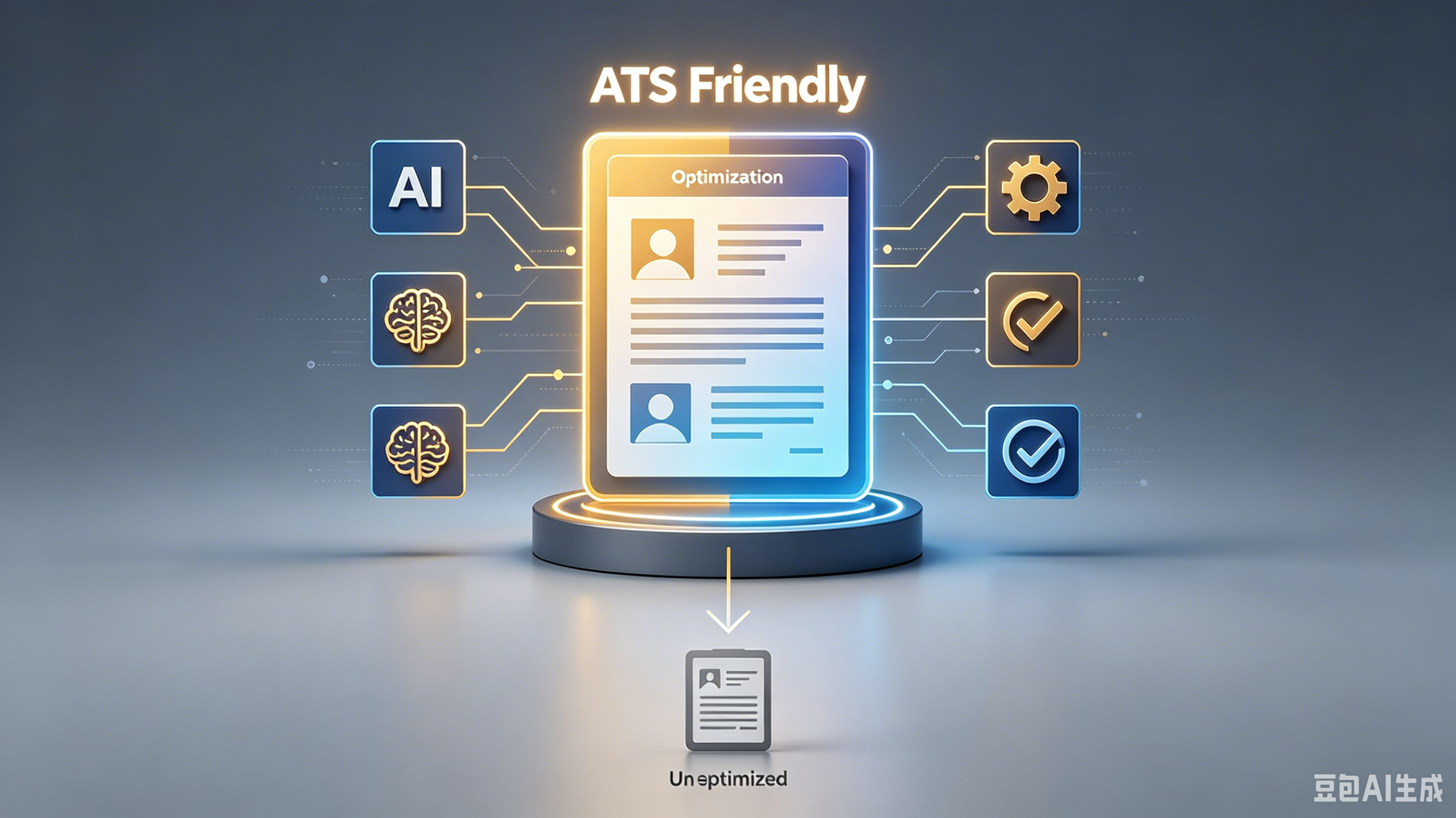
Crafting a Candidate ATS Resume That Tells Your True Story
Struggling with ? You're not alone. Here's a clear, step-by-step breakdown to help you move forward.
Table of Contents:
- Understanding the Gatekeeper’s Logic
- Mapping Your Career Direction with Keywords
- Structuring Your Narrative Arc
- Treating Skill Development as Character Growth
- Polishing the Final Draft
- Frequently Asked Questions
- Start Your Next Chapter
Crafting a Candidate ATS Resume That Tells Your True Story
The silence after hitting "submit" is deafening. You poured your soul into that document, yet the inbox remains empty.
It feels like shouting into a void. But here’s the truth: you aren’t being ignored by a person. You’re being filtered by a machine.
❗ Important: Your candidate ATS resume needs to speak two languages at once. It must satisfy the cold logic of algorithms while whispering your unique human narrative to the hiring manager who eventually sees it.
Understanding the Gatekeeper’s Logic
Think of the Applicant Tracking System (ATS) not as a villain, but as a librarian. It doesn’t read for pleasure; it scans for specific call numbers.
If your formatting is chaotic, the librarian can’t find your book. It gets shelved in the "unread" pile, regardless of how brilliant the story inside might be.
This isn’t about dumbing down your experience. It’s about translating your professional journey into a map the system can navigate.
Use standard headings like "Experience" and "Education." Avoid creative titles like "My Journey" or "Where I’ve Been." The bot doesn’t understand poetry.
Mapping Your Career Direction with Keywords
Keywords are the compass points of your career direction. They tell the ATS exactly where you’re headed and what terrain you’ve already conquered.
Don’t just guess. Read the job description like it’s a treasure map. Highlight the specific skills and tools they mention repeatedly.
- The key insight? Mirror their language exactly. If they say "project management," don’t write "led teams."
- Place these terms in your summary and bullet points naturally.
- Avoid keyword stuffing. It reads like spam and hurts your credibility.
This alignment ensures your professional goals appear relevant to their immediate needs. It shows you speak their dialect.
Structuring Your Narrative Arc
Your resume is a trailer for the movie of your career. It should highlight the climax, not every single scene from the backstory.
Start with a strong summary that defines your career positioning. Who are you?
What value do you bring? Keep it to three lines max.
Then, move into reverse-chronological order. This is the structure ATS engines crave most. It’s predictable and easy to parse.
Section
Purpose
ATS Tip
Header
Contact Info
No photos or graphics
Summary
Hook & Keywords
Include target job title
Experience
Proof of Skills
Use standard bullet points
Keep the design clean. White space is your friend. Clutter confuses the parser.
Treating Skill Development as Character Growth
In every hero’s journey, the protagonist acquires new tools. Your skill development section is where you showcase those upgrades.
List hard skills separately from soft skills. The ATS often searches for technical proficiencies first. Python, SQL, or Salesforce matter more than "hard worker" here.
But don’t neglect the human element. Weave soft skills into your achievement bullets. Show how empathy solved a client crisis.
This approach proves you’re not just a list of certifications. You’re a evolving professional ready for the next challenge.
Polishing the Final Draft
Before you send it out, test your candidate ATS resume. Copy and paste the text into a plain Notepad file.
If the formatting breaks or words merge, the ATS will struggle too. Fix those glitches now. It saves heartache later.
Check for typos. A single error can signal carelessness. Humans notice them; bots might reject you outright for poor data quality.
Ask a friend to read it. Does it sound like you?
Or does it sound like a robot wrote it? Aim for the sweet spot in between.
Frequently Asked Questions
Can I use columns in my resume?
Avoid them. Many older ATS platforms read left-to-right across columns, jumbling your text. Stick to a single-column layout for safety.
Should I include a photo?
No. In the US market, photos can lead to bias issues and often confuse parsing software. Keep it text-only unless you’re in acting or modeling.
How long should my resume be?
❗ Important: Keep it to one or two pages. Recruiters spend seconds scanning. Be concise. Every line must earn its place on the page.
Do I need a cover letter?
Yes, if allowed. It’s where you expand on your narrative. Use it to explain gaps or pivot stories that the resume can’t fully capture.
Start Your Next Chapter
Your career is a living story, not a static document. Treat your resume as the bridge between where you’ve been and where you’re going.
Tell your story correctly. Let GoatOpt help you craft a narrative that recruiters can’t ignore.
Still have questions about ? Drop them in the comments below — we read every single one and typically respond within 24 hours.
Ready to optimize your resume?
Get smart resume optimization tailored for the US job market.
Try Free Now