

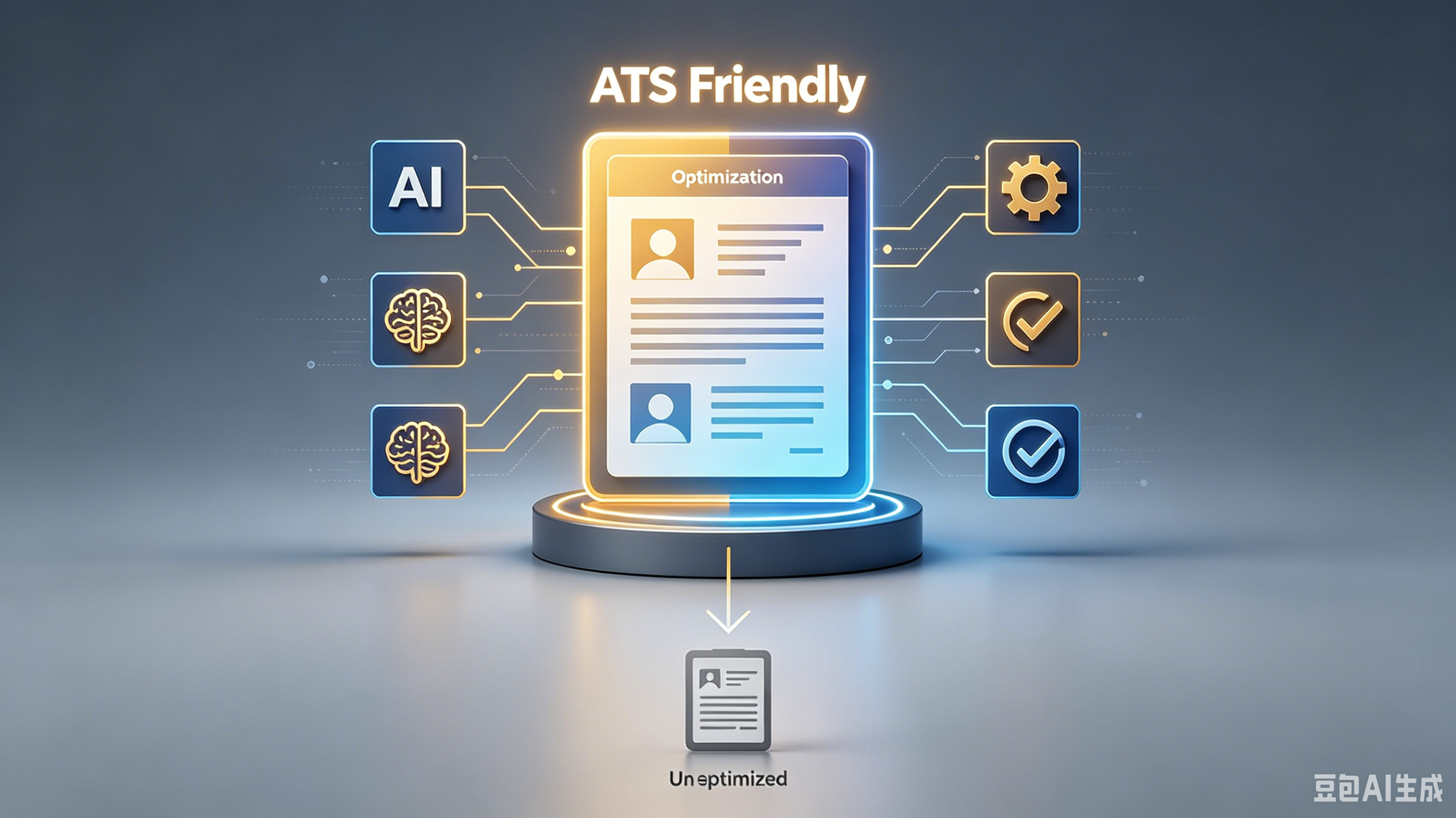
ATS Resume Steps: The International Student's Guide to Landing Interviews
TL;DR: comes down to understanding core principles and applying them consistently. Here's the short version.
Table of Contents:
- Why Your Resume Gets Rejected Before Human Eyes See It
- Step 1: Strip Down Your Formatting for Machine Readability
- Step 2: Mirror the Job Description Keywords Exactly
- Step 3: Structure Your Sections with Standard Headers
- Step 4: Quantify Achievements Instead of Listing Duties
- Step 5: Optimize for OPT and CPT Context
- Frequently Asked Questions
- Fair warning—Final Thoughts
ATS Resume Steps: The International Student's Guide to Landing Interviews
You spent four years grinding through finals, surviving on instant noodles, and mastering complex algorithms. But now, your dream job application vanishes into a digital black hole before a human ever sees it.
It’s not personal. It’s the Applicant Tracking System (ATS). For international students navigating OPT and CPT timelines, getting past this software gatekeeper is the single most critical hurdle in your US career journey.
Why Your Resume Gets Rejected Before Human Eyes See It
Most Fortune 500 companies use ATS software to filter thousands of applications instantly. If your resume doesn't speak the machine's language, it gets auto-rejected.
I’ve seen brilliant candidates with perfect GPAs get sidelined because their resumes were formatted for humans, not robots. The system scans for specific keywords and structure, ignoring everything else.
Common ATS Killers
- Complex columns or text boxes that scramble reading order
- Graphics, icons, or charts that parsers can't read
- Missing standard section headers like "Work Experience"
- Actually, Uncommon file formats like .pages or image-based PDFs
Step 1: Strip Down Your Formatting for Machine Readability
Start with a clean, single-column layout. Use standard fonts like Arial, Calibri, or Times New Roman in 10-12 point size.
Avoid headers and footers for critical contact info. Many ATS parsers ignore these areas entirely, meaning your phone number might never get indexed.
Save your file as a .docx or a simple text-based PDF.
While PDFs look sleek, older ATS systems still struggle with them. When in doubt, Word documents are safer.
Step 2: Mirror the Job Description Keywords Exactly
The ATS ranks you based on keyword matching. If the job description says "Project Management," don't write "Managed Projects." Use the exact phrasing.
Read the posting carefully. Identify hard skills like "Python," "SQL," or "Data Analysis." These are your primary targets for optimization.
Job Description Term
Weak Resume Phrase
Strong ATS Phrase
Customer Relationship Management
Handled client issues
Managed Customer Relationship Management (CRM) workflows
Data Visualization
Made charts
Created Data Visualization dashboards using Tableau
Cross-functional Collaboration
Worked with teams
Led Cross-functional Collaboration between engineering and sales
Step 3: Structure Your Sections with Standard Headers
Don't get creative with section titles. Use "Work Experience," "Education," and "Skills." Creative headers like "My Journey" or "What I Bring" confuse the parser.
List your experience in reverse chronological order. This is the standard format ATS algorithms expect to find.
For each role, include your job title, company name, location, and dates of employment. Use MM/YYYY format for dates to avoid ambiguity.
Step 4: Quantify Achievements Instead of Listing Duties
Recruiters skim for impact. Instead of saying "Responsible for sales," say "Increased regional sales by 20% in Q3 2023."
Numbers stand out to both bots and humans. They provide concrete evidence of your competence and help you rank higher for performance-based keywords.
1. Identify your top 3 achievements in each role 2. Add specific metrics: percentages, dollar amounts, or time saved 3. Start each bullet with a strong action verb like "Developed," "Led," or "Optimized" 4. Keep bullets under two lines for mobile readability
Step 5: Optimize for OPT and CPT Context
As an international student, clarity about your work authorization is vital. Don't hide it, but don't let it dominate your resume.
Include a brief line in your header or summary: "Eligible for OPT until [Date]." This reassures recruiters you have legal working status without requiring immediate sponsorship.
Focus on your unique global perspective. Highlight cross-cultural communication skills or language proficiency as assets, not afterthoughts.
Frequently Asked Questions
Should I include my photo on my US resume?
No. US hiring standards strictly discourage photos due to anti-discrimination laws. It can also confuse ATS parsers.
Does GPA matter for ATS filtering?
Only if you're a recent grad with less than two years of experience. Include it if it's above 3.5; otherwise, focus on skills and projects.
Can I use Canva templates for ATS resumes?
Risky. Most Canva templates use text boxes and graphics that ATS cannot read. Stick to simple Word or Google Docs formats.
How many keywords should I include?
Aim for natural integration. Stuffing keywords looks spammy. Target 5-8 core hard skills from the job description.
Final Thoughts
Navigating the US job market as an international student is tough, but mastering these ATS resume steps gives you a fighting chance. Your technical skills got you here; now let your resume open the door.
Pick one job description today, rewrite your resume using these steps, and submit it. Track your response rate over the next two weeks.
That's in a nutshell. Now go put it into practice.
Ready to optimize your resume?
Get smart resume optimization tailored for the US job market.
Try Free Now